Cameroon's former separatists face uncertainty outside state rehabilitation
Former fighters in Cameroon's Anglophone crisis describe a difficult choice between hiding from authorities and facing unmet promises in government reintegration programs.
By Petra Malhotra ·
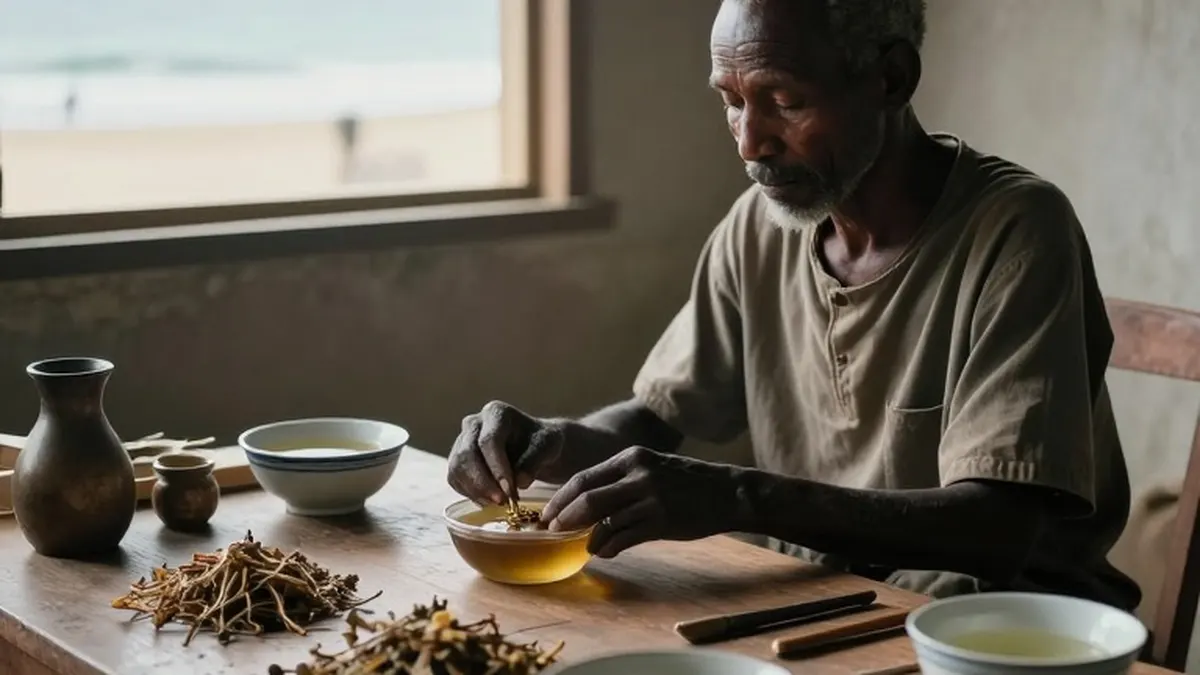
In the coastal city of Douala, Collins Mbah has traded his past life as a separatist fighter for a new role as a traditional healer. Between 2016 and 2020, the man in his mid-30s, known by the alias Commander No Sorrow, engaged in combat in the English-speaking Northwest region. He left the armed struggle after observing that fellow fighters were turning against the civilians they claimed to protect. Despite his departure from the conflict, Mbah has chosen not to join the government's disarmament, demobilisation and reintegration program, which he believes would feel like a betrayal of the people. He now seeks a quiet life, tending to the health of others rather than engaging in combat.
The current situation in Cameroon marks a decade since the unrest that began in late 2016. The conflict originated when Anglophone lawyers and teachers protested the appointment of Francophone magistrates and teachers in English-speaking regions. The government's crackdown on these protests eventually led to a separatist movement seeking independence for the Northwest and Southwest regions, a territory its supporters refer to as Ambazonia. Humanitarian and human rights organisations report that the conflict has killed thousands and displaced hundreds of thousands. New data from the Centre for Human Rights and Democracy in Africa released in October suggests the death toll may reach 10,000.
The government has intensified its efforts to end the standoff through community dialogue initiatives. Prime Minister Joseph Dion Ngute launched these events in Buea and Bamenda in September and October respectively. During these gatherings, local leaders encouraged fighters to surrender, and 55 former combatants were presented as having renounced the struggle. However, many ex-fighters remain skeptical of the state's rehabilitation centers, fearing arrest or poor treatment if they formally surrender.
Mbah, who is still on a government wanted list, struggles to move freely in Douala without a national identity card. He frequently moves between neighborhoods to avoid detection while collecting herbs for his healing practice. He is not alone in this independent path. Peter Mosongo, a 28-year-old motorcycle taxi rider in Buea, left the fight in 2019 after witnessing the killing of civilians. He avoided the reintegration program due to threats from former comrades, including the kidnapping of his father, and rumors that surrendering fighters were being silently eliminated.
Richard Bende, another former fighter who left in 2019, now works as a secondary school teacher. He cited concerns about how former fighters were treated at rehabilitation centers as his reason for avoiding the official program. In contrast, Paul Mukete entered the program in Tiko town six years ago. He fought in Kumba under the nickname King of Vultures. Mukete reports that while he learned poultry and pig farming, he received no psychological care. He notes that many of the 600 men at the center have since left out of frustration, with some even returning to the fight.
Mental health specialist Fonbeh Hedwick Chia argues that the reintegration centers lack the therapeutic support needed to rehabilitate the approximately 800 former fighters who have surrendered. He claims the government prioritizes the publicity of surrenders over the long-term welfare of the ex-combatants. Without proper psychological care, he warns, these men may remain marginalised and become a source of further instability.
The conflict is deeply rooted in Cameroon's colonial history. The country was divided between Britain and France after World War I. In 1961, British-administered Southern Cameroons voted to join the independent Republic of Cameroon, creating a federal state. This arrangement ended in 1972 after a controversial referendum. Today, the rebellion is fragmented among dozens of smaller factions, some supported by diaspora groups. Political scientist Chris Roberts notes that the war is driven by decades of poor governance rather than just language differences. He argues that a military solution is unlikely and that political reform is essential to ending the crisis.
The accounts of these former fighters highlight a central challenge for the government. While persuading rebels to surrender is the first step, helping them return to civilian life requires sustained and effective support. The gap between the promises made in reintegration centers and the reality faced by those who leave the battlefield remains a significant hurdle in resolving the Anglophone crisis.