US Army plans Iowa lead azide detonation under emergency powers
The US Army intends to destroy 68 barrels of toxic material in Iowa by Tuesday, citing emergency legal provisions to bypass a recent court order that halted the process.
By Francesco Flores ·
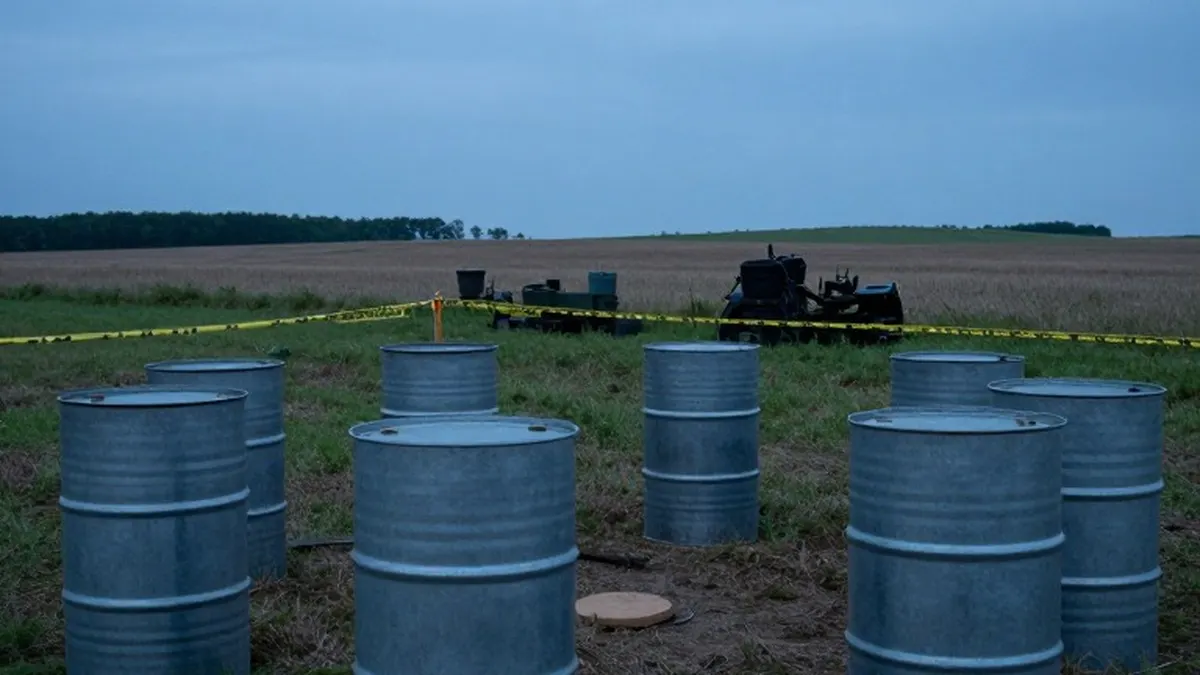
The US Army has announced it will detonate 68 barrels of toxic lead azide in Iowa by Tuesday, November 24, 2026. This action will be taken under emergency legal powers that permit the military to proceed without a standard environmental permit, effectively bypassing a court order that had temporarily blocked the operation.
The Trump administration informed the court of these plans in a filing late on Saturday. This move follows a temporary halt issued by the US Court of Appeals for the 8th Circuit on Thursday. The court had frozen the Army's environmental permit after environmental groups filed a lawsuit to stop the controversial detonation.
In its legal filing, the Justice Department stated that the Army intends to act by November 24, 2026. The government argued that the military must perform a controlled detonation to protect the public from the greater threat posed by an uncontrolled explosion. Federal officials emphasized the urgency of the situation, noting that a drop in temperature could destabilize the material and trigger an accidental blast.
The lead azide, an explosive used in military munitions, is located near Middletown, Iowa. The Army had previously postponed the detonation of the degraded material following significant public outcry from local residents and farmers. On Sunday, the Army did not immediately respond to inquiries regarding the precise timing of the event.
Earthjustice, the nonprofit environmental law organization representing the plaintiffs, issued a statement on Sunday criticizing the Army's approach. The group argued that the military appeared more focused on finding a way to sidestep the judicial process than on meeting public demands for greater transparency and protection. The plaintiffs, the Iowa Environmental Council and the Sierra Club's Iowa chapter, contend that the detonation would release a toxic plume of lead dust into the air.
According to the plaintiffs, this plume could travel up to 100 miles, or 161 kilometers, north of the site depending on weather conditions. Lead exposure is known to cause serious health issues, particularly in children, including potential damage to the brain and nervous system.
Acting Secretary of the Army Adam Telle stated on Thursday that the Army, in consultation with the US Environmental Protection Agency, determined that a controlled detonation was the option posing the lowest risk to the public. The department advised people to avoid the affected area during the detonation. Those who could not leave were urged to stay indoors, close windows and doors, and shut off heating and cooling systems that bring in outside air.
Following the exposure period, residents were instructed to wet-clean surfaces that children might touch to remove any lead dust. Additionally, the Iowa Department of Agriculture and Land Stewardship recommended that cattle farmers near the site move their livestock, feed, and equipment to alternate locations or indoors to minimize risk.
The situation highlights the tension between military logistics and environmental safety concerns in a rural community. As the deadline approaches, local authorities and residents remain on high alert, implementing the recommended precautions to mitigate the potential impact of the toxic release.