Likud and Yashar resume unity government talks amid internal pressure
Negotiators from the two parties will meet again at the Knesset after a previous session in Herzliya yielded limited progress on key issues.
By Francesco Flores ·
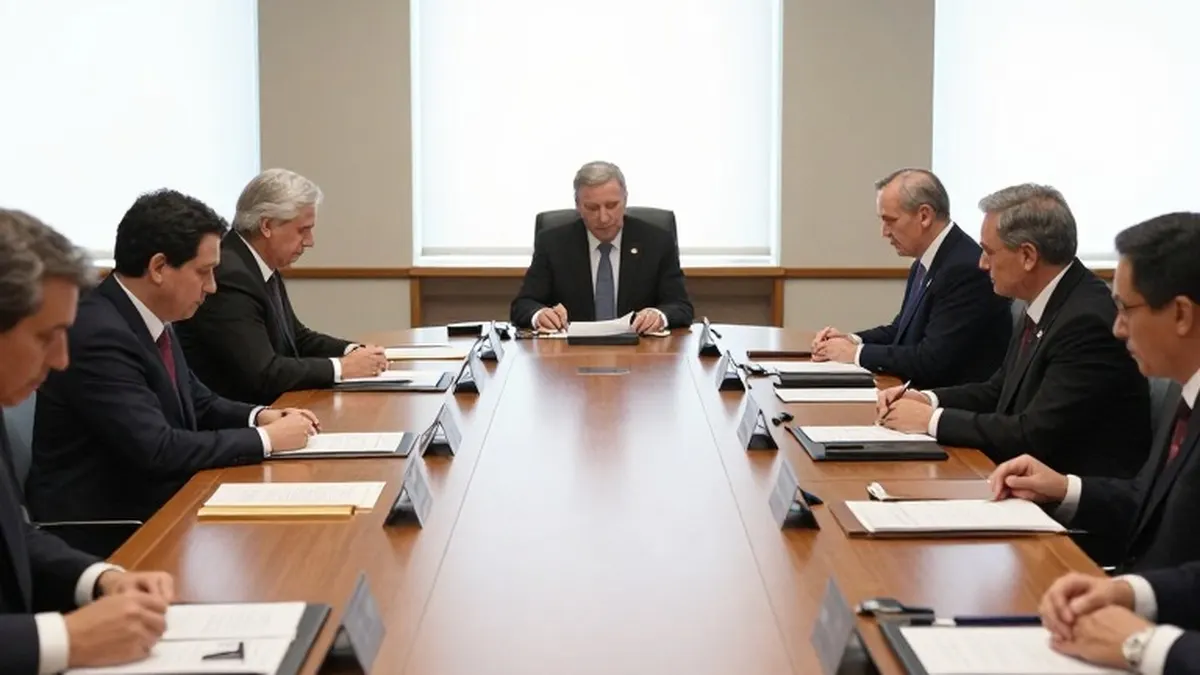
Representatives of Prime Minister Benjamin Netanyahu's Likud party and Gadi Eisenkot's Yashar party are set to convene again on Monday at 6 p.m. at the Knesset. This renewed round of dialogue follows a lengthy negotiation session held the previous day in Herzliya, which concluded without achieving significant breakthroughs on the central issues dividing the two sides.
The resumption of talks occurs as pressure builds within the change bloc to abandon the pursuit of a national unity government. Instead, some allies are urging a shift toward forming a minority coalition. Yair Golan, chairman of the Democrats party, renewed his criticism of the process on Monday morning, calling on the change bloc to end what he described as false negotiations with Likud and move forward with government formation.
While Eisenkot faces mounting criticism from within his own coalition partners, Netanyahu has not experienced comparable pressure from his right-wing allies to withdraw from the discussions. However, officials in Likud remain skeptical of their counterparts' intentions. Sources from the party suggested that Yashar has little genuine interest in establishing a unity government and is instead seeking to create a political justification for an alternative path.
"It's all a show. Yashar does not really want a unity government," Likud sources stated. They argued that the opposition party is aiming for a minority government supported by Arab parties, potentially with the addition of some haredi parties. According to these sources, Yashar is willing to sit at the table and agree on certain points so that they can later claim they tried to form a unity government but failed, thereby clearing the way for a minority administration with the support of Ra'am and the Joint List.
The previous meeting between Likud and Yashar took place on Sunday, November 22, at the Dan Accadia Hotel in Herzliya. Delegates spent more than four hours in discussion. Although they agreed to continue the process, little ground was covered on the major obstacles preventing a deal. The question of who would serve as the next prime minister was not discussed in depth during the session.
Specific disagreements also persisted regarding the composition of the cabinet. Yashar's demand to exclude Otzma Yehudit chairman Itamar Ben-Gvir from the next government was rejected by Likud. The parties also remained divided over the establishment of a commission of inquiry into the October 7 attacks, with particular friction over the mechanism for appointing its members.
Despite these hurdles, the negotiators reached limited agreements on two broad diplomatic principles. Both sides concurred on recognizing Israel as the nation-state of the Jewish people and on opposing the establishment of a Palestinian state. The decision to continue negotiations keeps the possibility of a unity government alive, even though fundamental disagreements over leadership and coalition composition remain unresolved.
Parallel to the direct talks between Likud and Yashar, the change bloc has continued discussions with haredi parties to expand the range of possible coalition arrangements. According to a report by Mati Tuchfeld in Maariv, significant progress has been made in negotiations with United Torah Judaism regarding the arrests of yeshiva students who have failed to comply with military conscription requirements.
The parties are reportedly working on a legal framework that would allow legislation to halt such arrests while ensuring the proposed law can withstand judicial scrutiny. This issue has emerged as a potentially decisive factor in securing haredi participation in an alternative coalition. If an agreement is reached, it could pave the way for United Torah Judaism to join a government headed by Eisenkot, significantly improving his prospects of assembling a coalition without Likud.
However, it remains unclear whether the negotiating teams have reached a final agreed formula. The outcome of these talks remains uncertain as both the unity government negotiations and the efforts to build an alternative coalition continue in tandem.