Tesla Reverses Course, Building In-House Maps to Fix FSD Gaps
The automaker is developing proprietary mapping tools to address persistent navigation errors, marking a significant departure from its previous camera-only strategy.
By Tunde Adeyemi ·
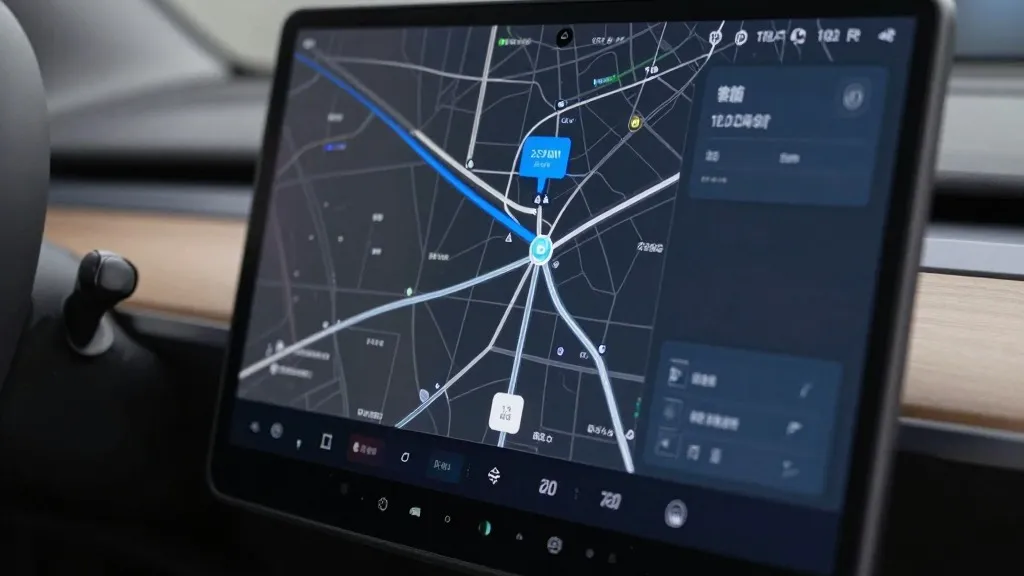
In 55% of the 30 km/h speed zones tested in Brussels, Tesla’s Full Self-Driving system recently accelerated past the limit, highlighting a critical weakness in the company’s vision-based approach. This specific failure rate underscores why Tesla has announced it is now constructing its own proprietary mapping infrastructure to correct common errors in speed limit recognition, parking logic, and route selection. The announcement, made during the Q3 2026 earnings call, signals a major strategic pivot for the automaker, which has long positioned its technology as superior to map-dependent competitors.
The decision to build in-house maps follows a timeline of shifting priorities for Tesla’s autonomy efforts. In 2015, the company initially began creating high-precision maps using data from its customer fleet, claiming a level of granularity 100 times greater than standard navigation. However, by 2019, CEO Elon Musk publicly reversed this stance, describing high-precision lane maps as a "huge mistake" that rendered self-driving systems "extremely brittle." During that period, Tesla argued that relying on detailed maps was akin to a "fool’s errand," favoring a pure vision and AI solution instead.
For seven years, Tesla maintained this camera-centric philosophy, often dismissing the reliance on lidar and high-definition maps used by rivals like Waymo. The recent announcement reverses that narrative, with the company now admitting that its fleet needs to perform the same environmental mapping tasks that Waymo has executed for years. While Tesla clarifies that its new system is not the same type of high-definition map Musk previously criticized, it is designed to solve specific environmental understanding problems that the current vision system fails to handle reliably.
The need for this infrastructure became apparent after a retail investor questioned why Tesla continued to rely on third-party maps, citing speed limits, parking, and typical routes as the most frequent points of failure. Ashok Elluswamy, Tesla’s VP of AI, agreed that the company "shouldn’t be depending on external people’s maps." He detailed a new AI-based architecture that will be fed by collective fleet data, allowing the system to learn individual driver preferences and respond to voice commands. This new map layer will begin managing the start and end of trips with FSD v15, with full navigation and parking integration planned for the coming months.
The operational shift brings Tesla’s methodology closer to that of Waymo, which maps cities by driving sensor-equipped vehicles through them before launching service. Tesla is now describing a similar model where its cars collect visual data to feed a central map that improves performance for the entire fleet. This approach aligns with how Tesla’s Robotaxi service currently operates, which is confined to small, geofenced areas. While the company is not yet utilizing centimeter-level high-definition maps, the trajectory suggests that the fleet-built map will become increasingly detailed over time.
The move addresses specific pain points that have drawn regulatory and public scrutiny. In the United States, the NHTSA is weighing an investigation into claims that Tesla Robotaxis speed through active school zones, a concern affecting approximately 1,000 Model Y and Cybercab vehicles. Internationally, the Brussels test results showed that the car’s display often indicated a 50 km/h limit in 30 km/h zones, leading to the observed speeding. By building its own maps, Tesla aims to ensure the vehicle can reliably read and apply these simple road instructions without relying on external data sources.
This development has implications for the timeline of unsupervised FSD in consumer vehicles. With the company focusing on refining its mapping capabilities and operating within geofences, the rollout of fully autonomous driving for customers remains targeted for Q2 of 2027. Critics note that while using maps is a standard practice in the industry, the shift underscores the limitations of the vision-only approach that Tesla originally championed. The company is now solving the same core problem as its competitors, albeit with a different sensor suite, as it continues to refine its self-driving stack.
Source: Electrek